

Donnington Castle is one of Berkshire’s most striking historic castle ruins, standing proudly on a hill just outside Newbury, England.
Built in the 14th century, this castle site offers a fascinating glimpse into medieval life, royal history and the English Civil War.
Today, managed by English Heritage, the remains of this once-impressive fortress are a popular place to visit, explore and enjoy panoramic countryside views across the Kennet Valley.
Being just a half an hour drive from Easthampstead Park, it’s an ideal addition to our guests' itinerary.
When to Visit Donnington Castle
Location: Near Newbury, Berkshire, England.
Access: Open year-round (outdoor historic site managed by English Heritage).
Donnington Castle is best enjoyed in daylight hours, especially in good weather when the hilltop views and surrounding countryside are at their most impressive.
What to Expect at Donnington Castle
A visit to Donnington Castle offers a mix of history, ruins and landscape views.
As a visitor, you can expect:
- A dramatic castle ruin with surviving walls and the iconic twin-towered gatehouse.
- A peaceful hilltop setting overlooking Newbury and the Kennet Valley.
- Open earthworks and remains of the original medieval structure.
- Wide panoramic views across Berkshire countryside.
- A quiet, reflective atmosphere ideal for exploring and photography.
- A short uphill walk from nearby parking areas.
The castle site is not large, but it is incredibly atmospheric, especially when imagining its role during the English Civil War sieges.
The History of Donnington Castle
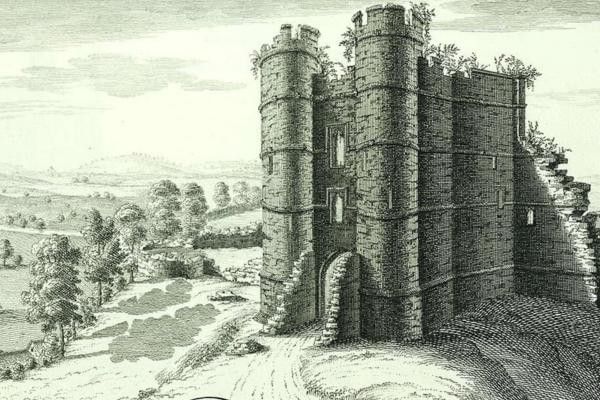
Donnington Castle was originally built in the 14th century by Sir Richard Abberbury under the reign of Richard II.
Over time, it became a royal residence and was later owned by notable figures such as Thomas Chaucer, son of the famous poet Geoffrey Chaucer.
During the 16th century, the castle was strengthened and visited by royalty, including connections to Henry VIII and Edward VI.
However, its most dramatic moment came during the English Civil War in 1646, when the castle endured a long siege.
After surrendering to Parliament forces, much of the structure was destroyed, leaving the ruin we see today.
Exploring the Castle Site
The castle sits on a steep hill, offering excellent views and a sense of its former strategic importance.
When you explore the site, you’ll find:
The remaining twin-towered gatehouse, still standing tall.
Visible earthwork defences surrounding the hill.
Traces of the original castle layout.
Open grassy areas perfect for a short walk or picnic.
Interpretive signs explaining the castle’s history.
It’s an easy but uneven walk, so suitable footwear is recommended.
Walking, Views and Nature Near Donnington Castle
One of the highlights of Donnington Castle is its setting.
From the top, you get impressive views over Newbury, Snelsmore Common, and surrounding villages such as Kintbury and Bagnor.
Many visitors combine a trip to the castle with:
A walk through nearby countryside trails.
Exploring Snelsmore Common nature reserve.
Visiting Donnington Grove nearby.
A stop at local spots in Newbury town centre.
It’s also a popular short hike destination for those exploring the area on foot or by bike.
Tips for Your Visit to Donnington Castle
A few simple tips to make the most of your visit:
Wear sturdy shoes for uneven ground.
Visit on a clear day for the best views.
Bring a camera for the panoramic scenery.
Allow 30–60 minutes for a relaxed visit.
Combine with nearby countryside walks.
FAQs About Donnington Castle
Is Donnington Castle open to the public?
Yes, it is an open historic site managed by English Heritage.
Is it suitable for families?
Yes, but children should be supervised due to uneven ground and hill terrain.
How old is Donnington Castle?
It dates back to the 14th century.
Can you go inside the castle?
No, it is a ruin, but you can walk around and explore the remains.
What makes Donnington Castle special?
Its combination of English Civil War history, hilltop views, and iconic gatehouse ruins makes it one of Berkshire’s most atmospheric historic sites.